How Professional Social Media Management Saves Time for Businesses
Random posting kills your growth, trains audiences to ignore you, and wastes your effort. Learn why consistency matters and how to fix sporadic posting habits.
Let me guess: you post on social media whenever you remember to. Maybe you go hard for a few days, then life gets busy and you disappear for two weeks. Then you feel guilty, post three things in one day, and the cycle repeats.
If this sounds familiar, you’re not alone. Most small businesses fall into this trap of random posting. It feels like you’re doing something, and hey, at least you’re showing up sometimes, right?
Wrong. Random posting is actually hurting your business more than you realize. And today, I’m going to explain exactly why inconsistency is killing your growth and what you should do instead.
Here’s something most people don’t understand: social media algorithms are designed to reward consistency, not sporadic bursts of activity.
When you post regularly, the algorithm learns your pattern. It knows when to expect content from you, and it shows your posts to more people because you’re a reliable source of content. Your account gets prioritized.
When you post randomly, the algorithm doesn’t know what to do with you. You’re unpredictable. So it shows your content to fewer people, even when you do post. Your reach drops, your engagement suffers, and you wonder why nobody sees your posts anymore.
It’s not personal—it’s just how the system works. Algorithms favor accounts that post consistently because those accounts keep users on the platform longer.
Think about the accounts you follow. The ones you engage with most are probably the ones that show up in your feed regularly, right? You start to recognize them, anticipate their content, and build a connection.
Now think about accounts that post once a month, randomly. Do you even remember they exist? Probably not.
Your audience is the same way. When you disappear for weeks at a time, people forget about you. They don’t think about your business when they need what you sell because you haven’t been top of mind. You’ve trained them to not expect anything from you.
Consistency keeps you in front of your audience. It builds familiarity, and familiarity builds trust. Random posting breaks that cycle completely.
Growth on social media is like pushing a boulder uphill. At first, it’s incredibly hard. You’re pushing and pushing, and nothing seems to move. But if you keep at it consistently, eventually you build momentum. The boulder starts rolling, and it gets easier to keep it moving.
Random posting is like pushing the boulder for a bit, letting it roll back down, then starting over from the bottom. You never build momentum because you keep starting from scratch.
Every time you go silent for weeks and then come back, you’re basically resetting your progress. You have to rebuild engagement, re-establish your presence, and remind people you exist. It’s exhausting and inefficient.
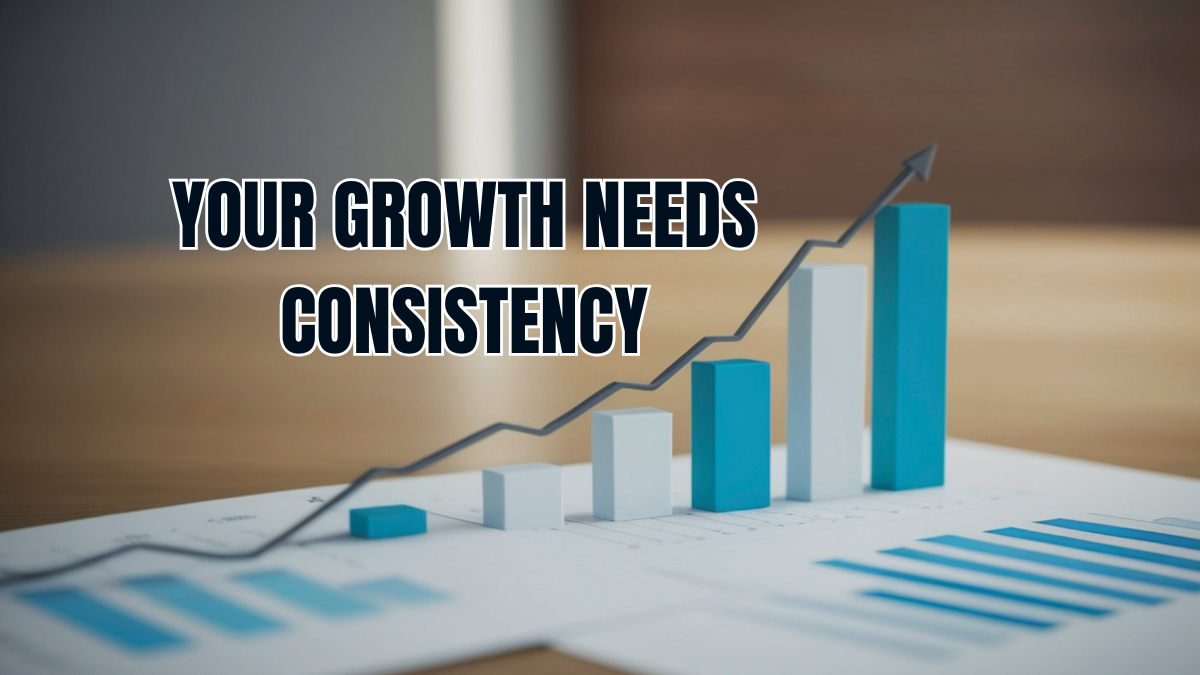
Consistent posting compounds over time. Each post builds on the last one. Your audience grows, your engagement increases, and your reach expands. But only if you show up regularly.
Here’s a practical problem with random posting: you can’t gather useful data about what content works.
If you post three times one week, nothing for two weeks, then five times in three days, how do you know which content performed well and why? Was it the content itself, or was it the timing? Did it do well because you posted it on Tuesday, or because you’d been silent for two weeks and people were just happy to see you?
Consistent posting gives you reliable data. You can see patterns. You can identify what type of content your audience loves, what time of day gets the best engagement, and what topics drive the most clicks. This information is gold for improving your strategy.
Random posting gives you messy, unreliable data that doesn’t tell you anything useful.
While you’re posting whenever you feel like it, your competitors are showing up consistently. They’re in your potential customers’ feeds every day or every few days, building relationships, providing value, and staying top of mind.
Guess who customers think of first when they need your type of product or service? Not you. The business that’s been consistently present in their social media feeds.
You’re essentially giving your competition free rein to build relationships with your potential customers while you’re MIA. That’s not a winning strategy.
Put yourself in a customer’s shoes. They discover your business and check out your social media. They see that you posted three times in January, nothing in February, twice in March, and nothing since.
What does that tell them? It suggests you’re not serious about your business. It makes them wonder if you’re even still operating. It doesn’t inspire confidence or trust.
Consistent posting shows that you’re active, engaged, and committed to your business. It signals professionalism and reliability. Random posting does the opposite.
When you don’t have a consistent posting schedule, you miss opportunities. A trending topic related to your industry pops up, but you’re in one of your “not posting” phases, so you miss it. A potential customer asks a question on social media, but you’re not actively engaged, so you don’t see it until days later when it’s too late.
Consistent presence means you’re there when opportunities arise. You can jump on trends, respond to questions, join relevant conversations, and capitalize on moments that could drive business your way.
Random posting means you’re always playing catch-up or missing out entirely.
Here’s a practical problem: when you only post randomly, you’re always creating content from scratch at the last minute. You don’t have a system, a content bank, or a plan. So every time you decide to post, you spend 30 minutes staring at a blank screen trying to figure out what to say.
This makes posting feel like a chore, which makes you avoid it, which makes you post even less randomly. It’s a vicious cycle.
Consistent posting forces you to develop a content creation system. You plan ahead, batch create content, and build a library of ideas. This makes posting easier, faster, and less stressful. Which makes you more likely to actually do it.
When you post randomly, you can’t build on previous content or develop themes. Each post is a disconnected island with no context or follow-through.
Consistent posting lets you tell a bigger story over time. You can create content series, build on previous posts, reference earlier content, and develop a cohesive message that reinforces your brand and values.
This coherence makes your marketing more effective. People start to understand what you stand for, what you offer, and why they should care. Random posts never build that kind of narrative.
If your audience knows you’re not going to respond to comments or be around consistently, they stop engaging with your content. Why bother commenting if you won’t reply? Why ask questions if you won’t answer?
Consistent posting trains your audience to engage. They know you’ll be there, you’ll respond, and you’re an active part of the community. This creates a positive feedback loop where more engagement leads to more reach, which leads to more engagement.
Random posting trains your audience to ignore you. And once you’ve trained them to do that, it’s really hard to win them back.
Now, before you panic and think you need to post five times a day every day forever, let me clarify what consistency actually means.
Consistency doesn’t mean posting constantly. It means posting on a reliable schedule that you can maintain long-term.
Posting once a week, every week, is consistent. Posting three times a week on the same days is consistent. Even posting every other week is consistent if you stick to it.
What matters is predictability and reliability. Your audience and the algorithm need to know when to expect content from you. The specific frequency matters less than your ability to maintain it.
If you’ve been posting randomly and want to fix it, here’s what to do:
Start small. Don’t commit to posting daily if you can’t maintain it. Choose a frequency you can realistically keep up—maybe once or twice a week to start.
Create a content calendar. Plan your posts in advance. Even just a week or two ahead makes a huge difference. You’ll never be scrambling for ideas at the last minute.
Batch create content. Set aside a few hours once a week or month to create multiple posts at once. This is way more efficient than creating content one post at a time.
Use scheduling tools. Platforms like Meta Business Suite, Later, or Buffer let you schedule posts in advance. Create your content when you have time, schedule it, and it posts automatically.
Set reminders. Until it becomes a habit, set calendar reminders for when you need to create and post content.
Start today. Don’t wait until Monday or next month. Post something today, then schedule your next post. Just start building the habit.
Random posting feels easier in the moment, but it makes everything harder in the long run. It kills your growth, wastes the effort you do put in, and hands your potential customers to competitors who show up consistently.
Consistent posting compounds over time. Each post builds on the last. Your audience grows, your engagement increases, and your business benefits. But only if you show up regularly and stick with it.
You don’t need to be perfect. You don’t need to post every day. You just need to be consistent and reliable. Pick a schedule you can maintain, commit to it, and watch what happens when you stop posting randomly and start showing up strategically.
Your future business growth depends on it.
Let's Talk
Have questions about your digital strategy? Want to explore how we can help you grow? Let’s chat. No pressure, no hard sell, just honest conversation about your goals.

Your partner in social media, paid ads, and SEO strategies that fuel growth.
+8801905495575
info@flockflare.com
Mohammadpur-1207
© Copyright 2026 Flock Flare | All Rights Reserved.