How Personal Branding Helps Business Owners Grow Faster
AI is transforming digital marketing from content creation to ad optimization. Learn how to use AI tools to work smarter, faster, and get better results.
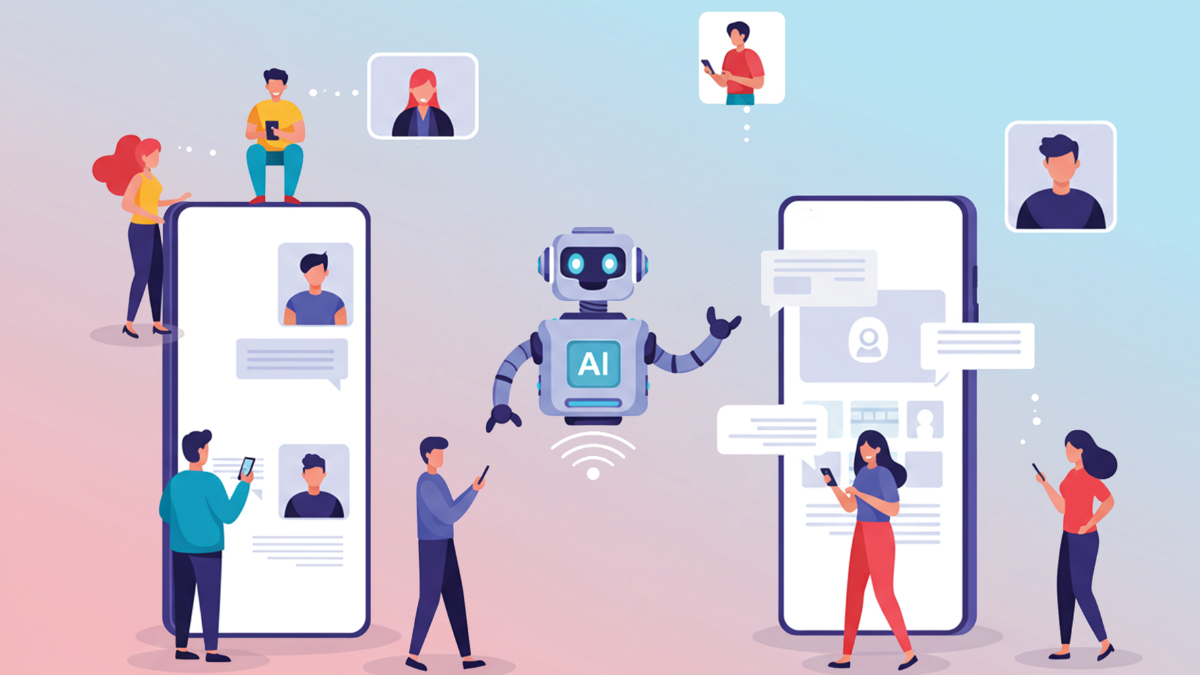
A few years ago, AI in marketing felt like science fiction. Now? It’s everywhere, and it’s fundamentally changing how businesses market themselves online.
If you’re not using AI in your digital marketing yet, you’re not just behind the curve—you’re working harder than you need to while getting worse results than competitors who’ve embraced these tools.
But AI isn’t magic, and it’s not going to replace marketers. What it does is make good marketers exponentially more effective while making certain old approaches obsolete.
Let me show you exactly how AI is transforming digital marketing and what it means for your business.
This is probably the most visible change. AI can now write blog posts, social media captions, email copy, ad text, and more in seconds.
Tools like ChatGPT, Claude, Jasper, and dozens of others can generate marketing content based on simple prompts. What used to take hours of writing and revising can now happen in minutes.
But here’s the reality: AI-generated content that’s just copy-pasted is obvious, generic, and ineffective. Everyone can tell when they’re reading soulless AI content with no personality or unique insight.
The real power is using AI as a productivity multiplier. Let AI create the first draft, generate ideas, or overcome writer’s block. Then add your expertise, personality, and unique perspective to make it actually valuable.
Smart marketers use AI to create content 3-5x faster, not to eliminate the human element. The combination of AI speed and human creativity is where the magic happens.
Personalizing marketing used to mean maybe using someone’s first name in an email. Now AI enables true personalization at massive scale.
AI can analyze customer data and behavior to automatically segment audiences, customize email content for each recipient, dynamically adjust website content based on who’s visiting, and show different ad creative to different people based on their likelihood to respond.
Amazon’s recommendation engine—”people who bought this also bought that”—is AI analyzing billions of data points to personalize product suggestions. Netflix does the same with show recommendations. These companies aren’t successful despite their size; they’re successful because AI lets them treat millions of customers as individuals.
Small businesses can now access similar capabilities. Email platforms use AI to optimize send times for each subscriber. Ad platforms use AI to show your ads to people most likely to convert. Website builders use AI to personalize content for different visitors.
This level of personalization simply wasn’t possible before AI. Now it’s becoming the baseline expectation.
Remember when running ads meant manually adjusting bids, testing audiences, and constantly monitoring campaigns? AI has fundamentally changed this.
Facebook, Google, and other ad platforms now use AI to:
The platforms’ AI is so sophisticated that manual management often performs worse than letting the AI optimize. It can process more data and make better decisions than humans can.
This doesn’t mean you don’t need strategy—you absolutely do. But the tactical execution and optimization increasingly happens through AI rather than manual tweaking.
AI chatbots have evolved from frustrating “press 1 for sales” experiences to actually helpful customer service tools.
Modern AI chatbots can:
For businesses, this means you can provide customer support outside business hours without hiring a night shift. You can handle 100 customer conversations at once during peak times. You can answer routine questions instantly while your human team focuses on complex issues.
Customers get faster responses. Businesses save money while improving service. That’s a genuine win-win enabled by AI.
Traditional analytics told you what already happened. AI-powered predictive analytics tells you what’s likely to happen next.
AI can analyze patterns in your data to predict:
This shifts marketing from reactive to proactive. Instead of analyzing last month’s results and adjusting, you can predict what will work and optimize before you spend money.
E-commerce businesses use AI to predict which products will sell well and adjust inventory. SaaS companies use AI to identify customers likely to cancel and intervene before they do. Marketers use AI to score leads and prioritize the ones most likely to close.
AI doesn’t just help create content—it optimizes it continuously based on performance.
Email subject lines get tested automatically, and AI sends the winning version to most of your list. Website headlines change based on what converts best for different visitors. Ad copy gets refined based on what’s driving results.
A/B testing used to require manually setting up tests, waiting for results, and implementing winners. Now AI can run dozens of tests simultaneously and optimize in real-time without human intervention.
This means your marketing is constantly getting better, not just when you remember to run a test.
AI image generation tools like Midjourney, DALL-E, and Stable Diffusion can create custom images in seconds based on text descriptions.
Need a specific image for a blog post? Instead of searching stock photo sites or hiring a designer, you can generate exactly what you want.
Social media graphics, ad creative, website images, product mockups—AI can create visual content that used to require design skills or budget for designers and photographers.
The quality isn’t always perfect for every use case, but it’s remarkable how good AI-generated images have become. For many marketing needs, they’re completely sufficient.
AI is transforming video content creation, which has traditionally been the most time-consuming content format.
AI tools can:
What used to require video editing skills and hours of work can now happen in minutes. This makes video content accessible to businesses that couldn’t afford professional video production.
AI is changing both how people search and how search engines rank content.
Google’s search algorithm increasingly uses AI to understand user intent and content quality, not just keywords. This means old-school keyword stuffing doesn’t work, but truly helpful, comprehensive content performs better than ever.
People are also using AI chatbots like ChatGPT instead of Google for some searches. This changes how content needs to be structured and where it needs to appear to be discovered.
Voice search through AI assistants continues growing, requiring optimization for conversational queries rather than just typed keywords.
Smart marketers are adapting by focusing on creating genuinely helpful content that answers real questions comprehensively, optimizing for AI understanding rather than just keyword density.
You used to need data analysts to make sense of marketing data. Now AI tools can analyze your data and explain insights in plain English.
Upload your sales data, and AI can identify trends, patterns, and opportunities you might miss. Ask questions about your marketing performance, and AI can answer them by analyzing your data.
This democratizes data-driven marketing. You don’t need a statistics degree to understand what’s working and what isn’t. AI translates complex data into actionable insights anyone can understand.
Marketing automation has existed for years, but it used to be pretty dumb—just following rules you set up manually.
AI-powered automation is different. It learns, adapts, and makes decisions based on data rather than just following pre-set rules.
Email sequences that adjust based on each recipient’s behavior. Ad campaigns that automatically shift budget to what’s working. Content recommendations that learn from user engagement. Lead scoring that improves over time.
This automation doesn’t just save time—it performs better than manual management because it can process more data and react faster than humans.
Here’s how to think about using AI in your digital marketing:
Use AI for speed and scale. Let AI handle repetitive tasks, generate first drafts, analyze data, and automate optimization. This frees your time for strategy and creativity.
Don’t eliminate the human element. AI-generated content without human editing is obvious and ineffective. Use AI as a tool, not a replacement for human judgment and creativity.
Start experimenting now. AI tools are getting better rapidly. The sooner you start learning how to use them effectively, the bigger advantage you’ll have.
Focus on strategy, not just tactics. AI can execute tactics brilliantly, but it can’t develop strategy. That’s still on you. Know your audience, understand your market, and set clear goals. Then use AI to execute more efficiently.
Stay ethical and transparent. Don’t use AI to deceive or manipulate. Use it to provide better experiences and more value to customers.
Here’s the uncomfortable truth: your competitors are probably already using AI in their marketing.
They’re creating content faster. Running more efficient ad campaigns. Providing better customer service. Personalizing experiences at scale. All while spending less time and money than traditional approaches required.
If you’re still doing everything manually the old way, you’re at a significant disadvantage. Not because AI is magic, but because it multiplies human effectiveness.
The businesses winning in digital marketing aren’t necessarily the ones with the biggest budgets anymore. They’re the ones using AI to work smarter and get more from their resources.
AI isn’t replacing marketers. It’s changing what marketers do.
The grunt work—writing first drafts, basic data analysis, routine optimization, repetitive tasks—is increasingly handled by AI. This frees marketers to focus on strategy, creativity, human connection, and the judgment calls AI can’t make.
The marketers who resist AI will find themselves working harder for worse results while watching competitors do more with less. The marketers who embrace AI thoughtfully will multiply their effectiveness and deliver better results than ever before.
AI in digital marketing isn’t coming—it’s already here. The question isn’t whether to use it, but how to use it effectively while maintaining the human elements that actually build relationships and drive real business results.
Start small. Pick one area where AI could help—content creation, ad optimization, customer service, data analysis. Learn how to use AI tools in that area. Get comfortable. Then expand.
AI is a tool, like any other. Used well, it’s incredibly powerful. Used poorly or ignored entirely, it’s a missed opportunity that competitors will exploit.
The future of digital marketing is human creativity amplified by AI capabilities. Make sure you’re on the right side of that combination.
Let's Talk
Have questions about your digital strategy? Want to explore how we can help you grow? Let’s chat. No pressure, no hard sell, just honest conversation about your goals.
Your partner in social media, paid ads, and SEO strategies that fuel growth.
+8801712752556
info@flockflare.com
Mohammadpur-1207
© Copyright 2026 Flock Flare | All Rights Reserved.